
RESEARCH
Changing how water
and biomolecules behave.
We design molecules and materials inspired by biological systems and natural polymers.
RESEARCH CONCEPT
Create molecules and materials that function in water.
Our research combines biomimetic chemistry, molecular design, polysaccharide science, and quantitative analysis. We focus on current challenges in solubilization, molecular transport, enzyme performance, nucleic-acid reactions, and material stability.
01
POLYSACCHARIDE NANOMATERIALS
Polysaccharide Nanomaterials
Turning β-glucan into materials that dissolve, carry, and function.
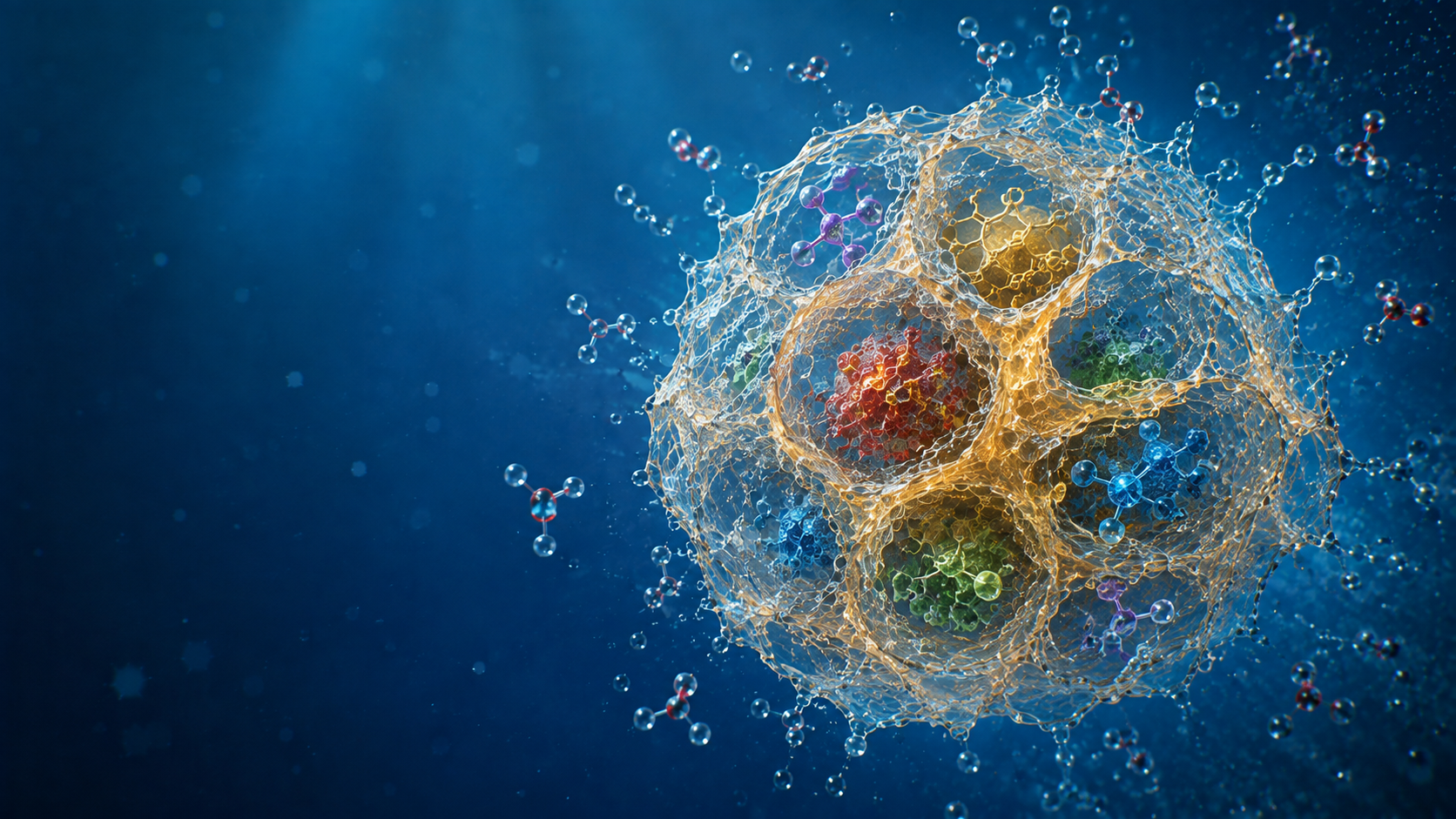
Functional compounds that do not dissolve in water are placed in nanoscale spaces created by polysaccharides.
Many ingredients used in food, cosmetics, and healthcare have extremely low water solubility. We restructure black-yeast-derived β-1,3-1,6-glucan into nanoparticles that disperse in neutral aqueous media.
These renatured glucan nanoparticles can incorporate compounds such as curcumin, all-trans-retinoic acid, and rebamipide by simple mixing. The included compounds can be retained and released more slowly than in conventional small-molecule hosts.
- Solubilization and dispersion of poorly water-soluble compounds
- Multiple internal and surface cavities
- Stabilization, retention, and controlled release
- Applications in food, cosmetics, and healthcare
REPRESENTATIVE PAPERS
Representative publications
Modification of the Release Rate of Curcumin from the Cavity of Renatured β-1,3-1,6-Glucan Nanoparticles by Changing the Molecular Weight of the Constituent Polysaccharide Chains
02
BIOMOLECULAR ACTIVITY & STABILITY
Molecules Controlling Biomolecular Activity and Stability
From the molecular strategies of extremophiles to additives that protect and activate enzymes and nucleic acids.
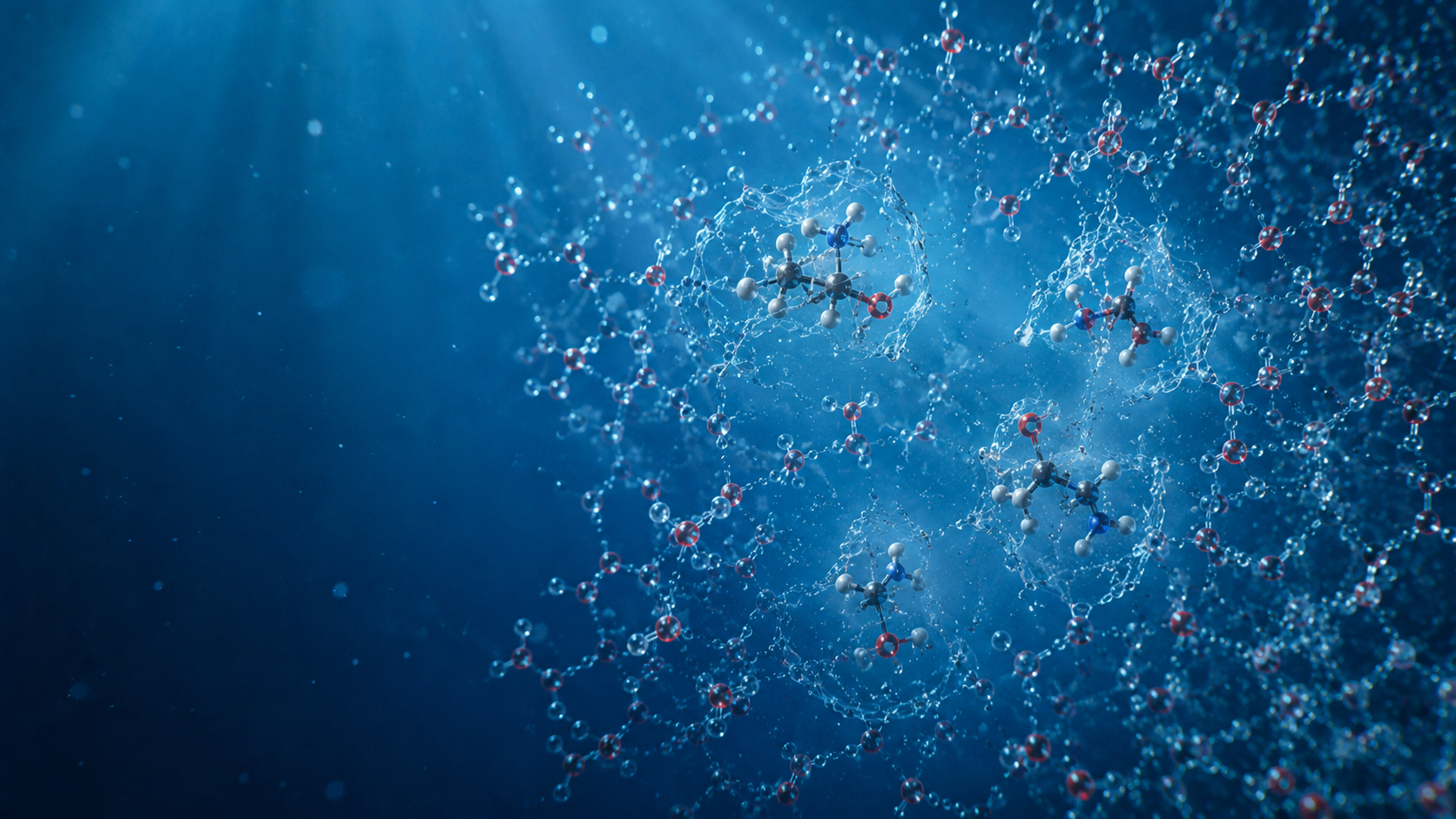
Changing biomolecular function simply by adding a designed molecule to the reaction medium.
Organisms exposed to harsh environments accumulate small zwitterionic metabolites such as betaines. Inspired by these natural compounds, we synthesize libraries of betaine derivatives and examine how molecular structure affects enzyme activity, thermal stability, salt tolerance, substrate specificity, freeze–thaw resistance, and diagnostic sensitivity.
Recent ether-modified carboxybetaines combine high aqueous solubility with enzyme activation and long-term stabilization, illustrating how molecular design can overcome the conventional trade-off between solubility and function.
Improving PCR by controlling both DNA and DNA polymerase
Betaine derivatives moderately destabilize stable DNA duplexes, facilitating strand separation during thermal cycling, while also enhancing DNA polymerase activity. Acting on both substrate and enzyme can improve amplification of difficult DNA sequences.
REPRESENTATIVE PAPERS
Representative publications
Cellular zwitterionic metabolite analogs simultaneously enhance reaction rate, thermostability, salt tolerance, and substrate specificity of α-glucosidase
Structural effect of synthetic zwitterionic cosolutes on the stability of DNA duplexes
Hydrophilic ether-modified carboxybetaines: a molecular design approach for enzyme activation and stabilization
AQUEOUS MOLECULAR DESIGN
Molecules that Alter Water Structure
We are studying the relationship between betaine derivatives and aqueous environments, with the aim of developing new approaches to dissolution, reactions, and analytical technologies in water. Detailed results are currently being prepared for publication.
● Detailed page in preparationCOMMON APPROACH
A common approach across our research
Learn from biology
Natural polysaccharides and cellular metabolites provide the basis for molecular and material design.
Relate structure to function
Systematic structural variation reveals what controls activity, stability, inclusion, and solubility.
Quantify phenomena
Spectroscopy, particle-size measurements, and kinetic analysis connect molecular structure, properties, and performance.
Develop applications
We consider concrete uses in food, cosmetics, diagnostics, and biocatalysis.
View publications, presentations, patents, and exhibitions
Our output page provides an overview of the laboratory's research achievements.